 Catholic Path
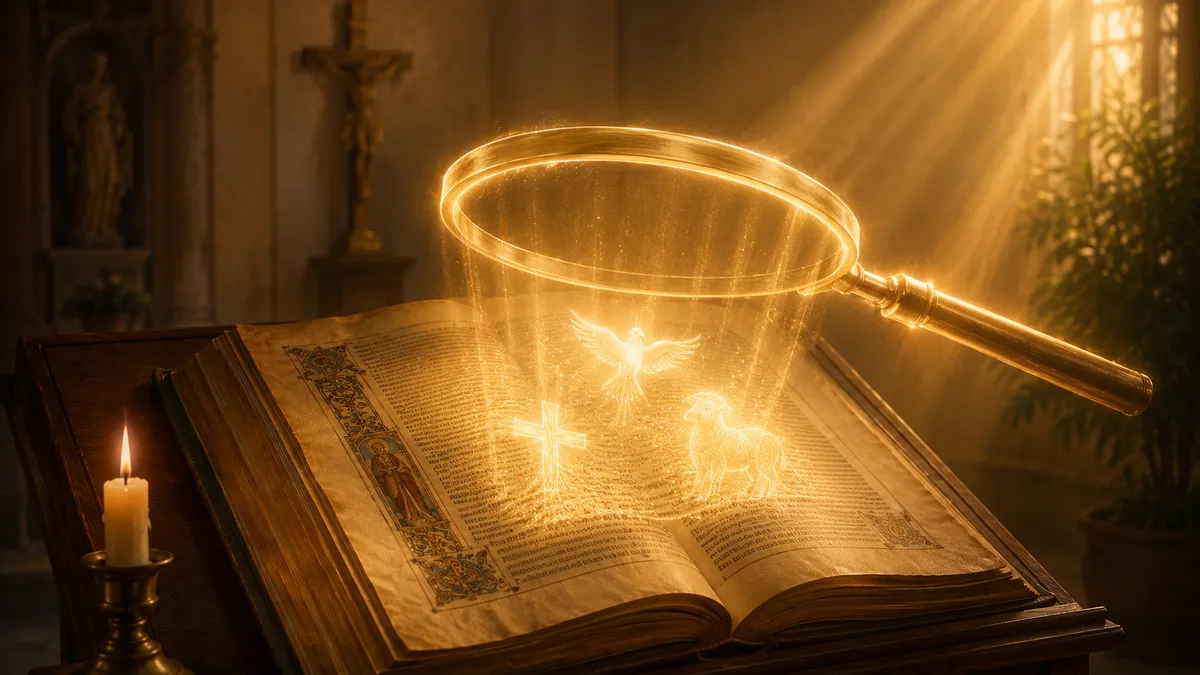
Have you ever read a Bible passage and felt you didn't quite understand it? Or heard interpretations of the same verse so different from one another that you didn't know which to believe? That is what exegesis is for: the art and science of interpreting Scripture faithfully.
What does "exegesis" mean?
The word comes from Greek and means "drawing out the meaning" of a text. To do exegesis is to read a biblical passage attentive to its context: who wrote it, to whom, in what historical moment, in what literary genre (poetry, history, parable, letter), and what the author intended to communicate. The Bible is the Word of God in human words, and so it deserves to be read with the same care we would give to a letter from someone we love.
Catholic exegesis adds something essential: we never read the Bible alone. As the Second Vatican Council teaches in the constitution Dei Verbum, Scripture, Tradition, and the Magisterium of the Church are so connected that none can stand without the others. The same Church that handed the Bible on to us helps us understand it.
The senses of Scripture
The Catechism of the Catholic Church (nn. 115-118), gathering up an ancient tradition, distinguishes two great senses:
- The literal sense: what the sacred author really meant, discovered through sound interpretation. It is the foundation of all the others.
- The spiritual sense, which unfolds in three ways:
- Allegorical: events acquire their full significance in Christ.
- Moral: what the text teaches us about living rightly.
- Anagogical: what points us toward our final homeland, heaven.
A simple example
Consider the crossing of the Red Sea. In its literal sense, it is Israel's liberation from slavery in Egypt. Read in the light of the New Testament, that passage through the waters announces Baptism, which frees us from sin; it teaches us to trust God in the midst of trials; and it points to our final entry into the promised land of heaven. As Saint Augustine said, the New Testament lies hidden in the Old, and the Old is unveiled in the New.
Reading this way protects us from two extremes: fundamentalism, which takes every sentence literally while ignoring its context, and arbitrary interpretation, where everyone makes the text say whatever they wish.
Read the Bible with the Church
You don't need to be an expert to read Scripture well; you need good companions for the journey. That is why Catholic Path offers you an exegesis of every verse, faithful to the tradition of the Church, so that each reading draws you closer to the heart of God.
Keep reading
- How to Meditate on Scripture Every Day
- Why Does the Catholic Bible Have 73 Books?
- Where to Start Reading the Bible
Sources
- Second Vatican Council, dogmatic constitution Dei Verbum, no. 10 and 12
- Catechism of the Catholic Church, nos. 109-119